

EU Web Accessibility: Why It Matters Today
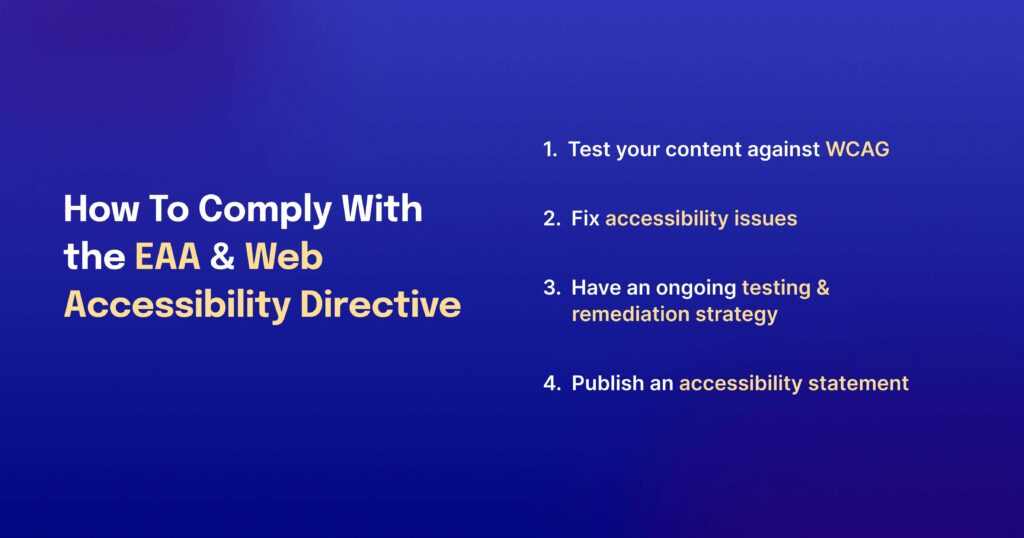
EU Web Accessibility is no longer just a regulatory requirement for public institutions — it has become a strategic priority for businesses operating in or serving customers within the European Union. With digital services playing a critical role in everyday life, ensuring that websites and web applications are accessible to all users is both a legal obligation and a competitive advantage.
Accessibility ensures that people with visual, auditory, motor, and cognitive disabilities can access and interact with digital platforms effectively. In a modern digital economy, exclusion due to poor design is not acceptable — and increasingly, it is not legal.
What Is Web Accessibility?
Web accessibility ensures that websites, web applications, and digital services can be used by everyone — including people with disabilities. This includes individuals with visual, auditory, physical, speech, cognitive, and neurological disabilities.
In an increasingly digital society, access to government services, healthcare platforms, eCommerce stores, educational portals, and online banking depends heavily on web access. When websites are not accessible, they exclude millions of users.
Accessibility is not only about compliance — it is about inclusion, usability, and better user experience for all. Features like captions, scalable text, proper color contrast, and keyboard navigation benefit a much broader audience than many realize.
The EU Web Accessibility Directive (WAD)
The Web Accessibility Directive was adopted by the European Union in 2016 and requires public sector websites and mobile applications across EU Member States to be accessible.
The Directive ensures that public institutions such as government agencies, municipalities, public hospitals, and universities provide digital services that meet accessibility standards.
Key requirements include:
- Publishing an accessibility statement
- Providing a feedback mechanism for users to report accessibility issues
- Undergoing regular monitoring and reporting
- Aligning with harmonized European accessibility standards
All EU Member States have incorporated the Directive into national law, and compliance is actively monitored.
While the Directive initially focuses on public sector bodies, its impact has influenced broader digital accessibility legislation across Europe.
EN 301 549 and WCAG Standards
The Directive references the European standard EN 301 549, which defines accessibility requirements for ICT products and services.
This standard closely aligns with the globally recognized Web Content Accessibility Guidelines (WCAG), developed by the W3C.
WCAG is structured around four core principles:
1️⃣ Perceivable
Information must be presented in ways users can perceive — including text alternatives for images and captions for videos.
2️⃣ Operable
Users must be able to navigate and interact with the interface using keyboards, assistive technologies, or alternative input devices.
3️⃣ Understandable
Content and navigation should be clear, predictable, and easy to comprehend.
4️⃣ Robust
Web content must work reliably across browsers, devices, and assistive technologies like screen readers.
Most EU compliance requirements target WCAG 2.1 Level AA, which has become the global benchmark for accessibility.
The European Accessibility Act: Expanding the Scope
Accessibility regulations in Europe have expanded beyond the public sector with the introduction of the European Accessibility Act.
This law extends accessibility obligations to many private sector businesses, including:
- E-commerce platforms
- Banking services
- Transport services
- Telecommunications providers
- Digital products and software
The European Accessibility Act significantly raises the bar for companies operating within the EU market. Businesses that fail to comply may face legal risks, reputational damage, and loss of market access.
Why Accessibility Matters for Businesses
Even if your organization is not directly bound by EU public sector regulations, accessibility delivers measurable advantages:
✔ Larger Market Reach
Over 100 million people in Europe live with some form of disability. Accessible design expands your potential audience.
✔ Better SEO
Search engines favor well-structured, semantic content — which aligns directly with accessibility best practices.
✔ Improved User Experience
Clear navigation, readable typography, and consistent structure benefit all users.
✔ Reduced Legal Risk
Accessibility litigation is increasing globally. Proactive compliance minimizes exposure.
✔ Stronger Brand Reputation
Inclusive brands build trust and demonstrate corporate responsibility.
Accessibility is no longer a “nice to have.” It is a competitive advantage and a business imperative.
Practical Accessibility Implementation Tips
From a development perspective, accessibility should be integrated from day one — not added as an afterthought.
Here are foundational best practices:
- Use semantic HTML elements (header, nav, main, footer)
- Ensure keyboard accessibility for all interactive components
- Maintain minimum color contrast ratios
- Add alt text to images
- Provide ARIA labels where necessary
- Test with screen readers and automated auditing tools
- Conduct manual accessibility testing
Accessibility should be part of your QA process, design reviews, and development lifecycle.
Accessibility at SB Code Lab
At SB Code Lab, accessibility is embedded into our development workflow. With expertise in WCAG testing, ADA compliance, frontend development, and custom web applications, we help businesses:
- Audit existing websites for accessibility gaps
- Implement WCAG 2.1/2.2 AA compliance
- Remediate accessibility violations
- Build accessible web applications from scratch
- Prepare documentation and accessibility statements
Our goal is simple: build digital products that are inclusive, compliant, and future-proof.
Final Thoughts
The EU Web Accessibility policy framework represents a global shift toward inclusive digital infrastructure. Regulations such as the Web Accessibility Directive and the European Accessibility Act signal a clear message — accessibility is now a legal, ethical, and strategic necessity.
Organizations that invest in accessibility today position themselves for sustainable growth tomorrow.
If your business operates in Europe or serves European customers, now is the time to assess your digital accessibility strategy.
Need an accessibility audit or compliance roadmap? SB Code Lab is ready to help.