
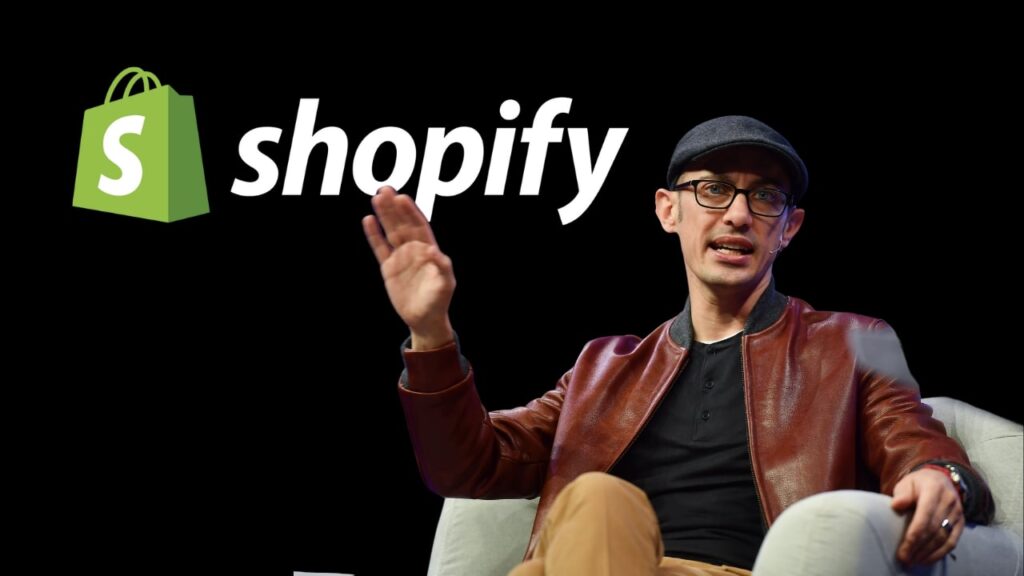
Shopify CEO Tobi Lütke sent a memo in early 2025 that every other CEO will eventually have to write—but few have the courage to send today:
Shopify AI mandatory. AI usage is now mandatory for all employees. Not encouraged. Not optional. Mandatory.
Under this Shopify AI mandatory policy, performance reviews now explicitly evaluate how creatively and efficiently employees apply AI to their workflows. And before any team can hire a new human, they must first prove that AI cannot perform the needed tasks.
The reaction was predictable. Some praised bold leadership. Others warned about job displacement and dehumanizing work.
Both groups missed the strategic insight.
Shopify isn’t trying to replace humans with AI. They’re ensuring every human at Shopify becomes an AI-augmented worker who can outperform non-augmented competitors by 10x or more.
The companies that don’t make similar mandates won’t fail immediately. They’ll just slowly lose ground to competitors whose employees leverage AI while theirs don’t, creating productivity gaps that compound until they’re insurmountable.
When Your Career Depends on AI Proficiency
Making AI proficiency a performance evaluation criterion transforms it from technology adoption into job requirement.
Traditional performance reviews evaluated task completion, quality, collaboration, and leadership. Now Shopify adds AI proficiency as an explicit criterion. Employees who refuse to use AI or who use it minimally will receive lower performance ratings regardless of how well they do their jobs using traditional methods.
The evaluation doesn’t just measure familiarity with AI tools. It assesses how creatively and efficiently employees apply AI to business challenges.
An employee who uses ChatGPT to proofread emails? Gets less credit than one who builds custom AI workflows automating entire processes.
The bar is continuous improvement in finding novel AI applications rather than just checking boxes about basic usage.
This evaluation approach forces employees to take AI adoption seriously. When career progression, raises, and potentially employment itself depend on demonstrating AI proficiency, suddenly learning these tools becomes urgent rather than something to explore when time permits.
(And yes, employees must actively document their AI usage in performance reviews. No claiming proficiency without evidence.)
The Hiring Rule That Changes Everything
Here’s Shopify’s most controversial policy: teams must prove AI cannot perform needed tasks before requesting additional human headcount.
This inverts traditional hiring processes where managers identify work needing done and hire accordingly.
Traditional hiring conversations went like this: “We need someone to handle customer support tickets, write marketing copy, analyze sales data. Let’s hire for these roles.”
The new process requires asking: “Which of these tasks can AI handle? Which genuinely require human judgment, creativity, or relationship skills? Only hire humans for what AI can’t do.”
This creates friction intentionally. Managers must think deeply about whether they’re hiring humans to do repetitive work that AI could automate or whether genuine human capabilities are required.
The policy doesn’t ban hiring. It bans thoughtless hiring that adds humans to do work AI could handle, then experiencing the inevitable productivity disadvantage when those humans compete against AI-augmented teams elsewhere.
The practical implementation involves teams submitting justifications explaining what tasks need performing and why AI cannot handle them adequately. This forces managers to actually test whether AI tools can accomplish the work rather than assuming humans are necessary.
The rule also changes how teams think about capacity. Instead of “we need three more people to handle this volume,” teams ask “can we use AI to handle 70% of this work, then hire one person to handle the 30% requiring human judgment?”
What Mandatory Actually Means
Requiring AI usage across every role from entry-level to executives ensures the mandate isn’t just symbolic or limited to technical teams.
Customer support teams use AI chatbots to handle routine inquiries, freeing human agents for complex situations requiring empathy. Marketing teams use AI for image generation and campaign optimization. Engineering teams use AI coding assistants. Finance uses AI for forecasting. HR uses AI for resume screening.
The universality prevents the dynamic where some teams embrace AI while others avoid it, creating capability gaps that undermine collaboration. When everyone uses AI, teams speak the same language about capabilities and limitations.
The mandate also ensures leadership practices what they preach. Executives using AI to analyze strategic alternatives and draft communications demonstrate that AI augmentation applies to knowledge work at all levels rather than just being automation for lower-level tasks.
The broad application also generates diverse use case discovery. Customer support discovers applications engineering wouldn’t consider. Marketing finds uses finance wouldn’t explore. This diversity accelerates organizational learning about effective AI deployment far faster than centralized IT-driven rollouts.

The Cultural Shift Nobody Talks About
Mandating AI usage requires cultural change beyond adopting new tools. Employees must shift from viewing AI as threat or novelty to treating it as essential professional capability like literacy or numeracy in previous eras.
The cultural challenge emerges from legitimate concerns. Some employees worry AI will eliminate their jobs. Others fear looking incompetent if they struggle while colleagues adapt easily. Some resist philosophically, viewing AI as dehumanizing their craft.
Shopify addresses these concerns through transparency about intent: AI isn’t replacing humans but augmenting them. The goal is enabling each employee to accomplish work that would previously require multiple people.
The mandate also forces confronting reality. Refusing AI adoption doesn’t preserve jobs. It just means losing those jobs to competitors whose employees embrace AI and consequently outperform non-augmented workers.
The choice isn’t between adopting AI or maintaining current methods. It’s between adopting AI at Shopify or losing employment to people who adopt AI elsewhere.
The cultural shift also requires accepting imperfect AI tools that make mistakes and require human oversight. Employees accustomed to complete control must learn to work with AI that’s highly capable but not infallible.
Why Competitive Necessity Isn’t Hyperbole
Shopify’s leadership frames the AI mandate not as optional innovation but as competitive necessity in industries rapidly automating core functions.
Shopify’s leadership frames the AI mandate not as optional innovation but as competitive necessity in industries rapidly automating core functions.
The competitive pressure extends beyond direct rivals. Shopify’s merchant customers expect platform capabilities that require AI: sophisticated recommendation engines, automated marketing optimization, intelligent inventory management, and predictive analytics.
The mandate also addresses talent market reality. Technology companies hiring software engineers increasingly expect candidates comfortable with AI coding assistants. Marketing firms expect proficiency with AI creative tools. Shopify mandating AI usage ensures their employees develop skills necessary to remain competitive in the talent market even if they eventually leave.
The competitive framing helps employees understand that resistance doesn’t preserve their jobs. Shopify will either adopt AI aggressively and remain competitive or gradually lose market position to more automated competitors, eventually resulting in larger-scale job losses than would occur from AI adoption.
The Human Skills That Matter More Than Ever
Alongside the AI mandate, Shopify emphasizes developing uniquely human capabilities that AI cannot replicate: storytelling, curiosity, nuanced judgment, emotional intelligence, and creative problem-solving.
The strategy isn’t replacing human skills with AI but dividing work so AI handles routine tasks while humans focus on capabilities where they excel.
This division recognizes complementary strengths. AI excels at processing information at scale, identifying patterns, executing repetitive tasks consistently, and providing instant knowledge access. Humans excel at understanding context and nuance, building relationships and trust, navigating ambiguity, and making judgment calls without clear algorithms.
The emphasis on human skills provides career development direction. Employees wondering how to remain valuable should develop capabilities AI cannot easily replicate. Becoming better at building customer relationships, telling compelling stories, asking insightful questions, or navigating complex interpersonal dynamics creates sustainable competitive advantages.
Rather than reducing employees to executing AI-directed tasks, the vision is liberating them from routine work to focus on activities requiring human judgment and creativity.
The Documentation Requirement That Drives Learning
Requiring employees to disclose and document AI usage creates organizational transparency that drives continuous improvement and knowledge sharing.
The documentation creates visibility into which AI applications deliver value versus which are just novelty. Teams can identify high-impact use cases to scale and discontinue low-value applications consuming time without returns.
The disclosure requirement also prevents employees from claiming AI proficiency without evidence. In environments where usage is encouraged but not verified, some employees exaggerate their adoption. Requiring concrete documentation ensures claimed proficiency reflects actual practice.
The transparency facilitates best practice sharing. When employees document novel AI applications that dramatically improve productivity, other teams can learn from and adapt these approaches. This cross-pollination accelerates organizational learning far more than each team independently discovering use cases.
The Wake-Up Call to Every Other CEO
Shopify’s memo has been characterized as a “wake-up call” that AI integration is no longer optional but a core skill for modern workforces and a baseline requirement for evolving companies.
The visibility of Shopify’s mandate forces other companies to address AI adoption explicitly. CEOs must now decide: do we make similar mandates, establish different formal policies, or maintain status quo? The very existence of Shopify’s approach makes doing nothing a conscious choice.
The mandate also changes talent expectations. As more companies adopt similar policies, job seekers increasingly expect employers to provide AI tools and training. Companies without clear AI strategies face recruitment challenges.
The precedent also emboldens other companies considering similar mandates but hesitant to move first. Shopify absorbing the controversy and demonstrating implementation approaches makes it safer for others to follow.
This cascade effect means Shopify’s mandate likely triggers similar policies across the technology sector and eventually other industries.
The Implementation Challenges Nobody’s Talking About
Translating a mandate into effective practice requires solving substantial implementation challenges.
Tool provisioning: Customer service needs different tools than software engineering. Marketing requires different capabilities than finance. Shopify must evaluate, procure, and integrate numerous AI tools rather than standardizing on single solutions inadequate for organizational diversity.
Training: Teaching thousands of employees with varying technical sophistication how to use AI tools effectively. Basic “how to use ChatGPT” training doesn’t suffice. Employees need role-specific guidance about AI applications valuable for their particular workflows.
Governance: Establishing appropriate oversight preventing AI misuse while not creating bureaucratic friction that undermines adoption. Guidelines about what AI usage is encouraged versus prohibited, how to verify AI outputs are accurate, and when human review is required.
Measurement: Actually assessing AI proficiency during performance reviews. What constitutes creative and efficient AI usage? How do you evaluate someone’s AI proficiency in marketing versus engineering versus finance?
The Job Displacement Question
The mandate inevitably raises questions about job displacement. If AI can perform many tasks previously requiring humans, does aggressive AI adoption reduce employment?
The displacement reality is that some roles will indeed change or disappear. Tasks like writing basic product descriptions, answering routine customer inquiries, or conducting simple data analysis become heavily automated.
However, Shopify argues that AI adoption enables the company to grow faster, serve more merchants, and build more products than would be possible without AI augmentation. This growth creates new roles and opportunities that wouldn’t exist if Shopify maintained pre-AI productivity levels.
The individual employee impact varies dramatically. Employees who successfully transition to AI-augmented workflows become more valuable and secure. Employees who struggle to adapt or who performed primarily routine tasks face career disruption requiring retraining or role changes.
The mandate forces this adaptation proactively rather than allowing gradual displacement as AI capabilities improve.
What This Means for Every Company
For companies watching Shopify’s mandate, the strategic question isn’t whether to follow but when and how.
The direction is clear: organizations will increasingly require AI proficiency across roles as AI capabilities mature and competitive pressure intensifies.
Start by assessing current AI usage across the organization. Where are teams already using AI effectively? Where is adoption lagging? Which roles have clear AI augmentation opportunities?
Experiment with mandatory AI usage in specific departments before organization-wide mandates. Pilot programs identify implementation challenges and build organizational capability before committing to universal mandates.
Invest in training and tools infrastructure before mandating usage. Requiring employees to use AI without providing adequate tools and training sets them up for failure and generates resistance.
Develop clear evaluation frameworks for assessing AI proficiency appropriate to different roles. Generic “uses AI tools” criteria don’t provide meaningful feedback.
Communicate the strategic rationale clearly and repeatedly. Employees need to understand that AI mandates come from competitive necessity rather than management fads or cost-cutting exercises.
The Future of Work Is Already Here
Shopify’s mandate represents an early example of a broader transformation in how work gets performed across industries.
The future likely involves universal AI augmentation where employees across all roles leverage AI capabilities as naturally as they currently use email, spreadsheets, and search engines.
This future doesn’t mean replacing human workers with AI. It means every human worker becomes dramatically more productive through AI augmentation, changing the nature of work from executing tasks to orchestrating AI systems and focusing on areas requiring human judgment.
The companies that successfully navigate this transition build competitive advantages that compound over time. Their employees develop AI augmentation skills making them more productive than non-augmented competitors. Their organizations develop institutional knowledge about effective AI usage. Their cultures embrace AI as professional capability rather than viewing it as threat.
The companies that resist or delay face gradually widening productivity gaps that eventually become insurmountable. The gap between AI-augmented and non-augmented workers will reach 5x-10x or more for many tasks.
The Mandate That Every CEO Will Eventually Send
Making Shopify AI mandatory for every employee isn’t about technology adoption. It’s about ensuring organizational survival through the competitive transformation that AI enables.
Shopify isn’t being aggressive or overly innovative—they’re being realistic about what’s required to compete effectively in industries where Shopify AI mandatory-style policies will soon become the standard.
The question facing every other CEO is simple: do you introduce a Shopify AI mandatory–level mandate now while it still feels bold, or wait until competitive pressure forces reactive policies after you’ve already lost ground to companies that moved earlier?
Requiring new hires to prove AI can’t do their jobs under the Shopify AI mandatory framework isn’t about reducing headcount. It’s about ensuring every human you hire adds genuine human value rather than just executing tasks that AI could handle better, faster, and cheaper.
Follow me for weekly insights on workforce transformation and AI adoption strategies that create competitive advantages.
How SB Code Lab Helps Businesses Win in an AI-Mandatory World
The Shopify AI mandatory shift is not just a Shopify story—it’s a blueprint for how every future-ready business must operate. Companies that delay AI integration will struggle to compete with those that redesign their workflows around automation, data intelligence, and AI-driven decision-making.
At SB Code Lab, we help businesses turn this transformation into real-world results. From AI-powered website development, smart automation workflows, custom web applications, Shopify & eCommerce optimization, to accessibility-first digital experiences, we ensure your business is not just using AI—but leveraging it strategically for measurable growth.
If you’re preparing your organization for the AI-first future, SB Code Lab is your technology partner for scalable, secure, and intelligent digital solutions.