

Shopify’s challenge was clear: compete with Amazon’s scale while preserving merchant brand ownership.
Its answer combined a smart distribution play — the Shopify Walmart Partnership — and deep merchant-centric AI investments like Shopify Magic.
The result? A differentiated alternative for sellers — blending reach with control.
In 2020, Shopify became the first commerce-platform partner for Walmart Marketplace, unlocking a native channel that allowed Shopify merchants to list and sell directly on Walmart.com.
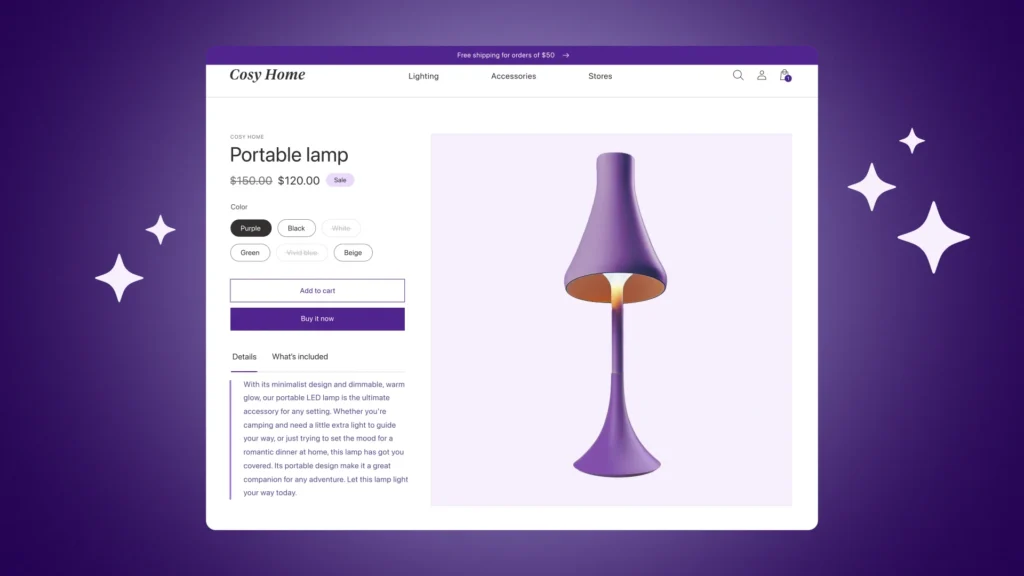
1) The Strategic Move: Walmart Channel = Instant Marketplace Reach
Why this mattered
- Merchants gained access to Walmart’s massive shopper base.
- They didn’t need to abandon their own storefronts or brand identity.
- Shopify extended its value not as a marketplace, but as a commerce OS that plugs into high-value retail networks.
This move gave Shopify sellers big-platform distribution without sacrificing ownership.
2) Why This Matters Versus Amazon, Shopify Walmart Partnership + AI
Amazon’s value: reach + operational convenience
Shopify’s value: ownership + flexibility
Amazon requires sellers to operate inside its marketplace—often trading brand control, customer data, and margin for traffic.
Shopify took a hybrid route:
- Maintain a direct D2C experience on Shopify
- Access marketplace demand via Walmart
- Avoid Amazon’s higher fees and brand governance constraints
This duality became a key pillar of Shopify’s competitive narrative:
“Reach like Amazon, own like Shopify.”
3) The AI Lever: Shopify Magic and Merchant Productivity
To close the capability gap with Amazon’s AI-powered retail engine, Shopify heavily invested in:
- Shopify Magic (AI-generated copy, product descriptions, emails)
- Sidekick (merchant assistant for workflows, analytics, setup)
- AI personalization tools (recommendations, dynamic merchandising)
- Automated support + operational workflows
These tools democratized advanced capabilities that historically only Amazon-scale companies could execute.
As highlighted in recent reporting and Shopify’s own roadmap, AI became a core merchant acquisition and retention lever, enabling SMBs to deliver:
- Better product discovery
- Higher conversion
- Reduced operational workload
- Faster content creation at scale
In short: AI shrinks the resource gap between small merchants and marketplace giants.
4) Business Impact — What This Combination Achieved
• Faster Access to Demand
Walmart Marketplace gave Shopify merchants a shortcut to scale — especially mid-sized sellers, Shopify Walmart Partnership + AI.
• Higher Merchant Economics
D2C ownership on Shopify →
better margins + customer data control vs. pure marketplace dependence.
• AI-Driven Operational Leverage
Automation and personalization helped merchants compete for repeat customers off Amazon.
• Strengthened Platform Stickiness
More traffic avenues + more productivity tools = higher merchant lifetime value.
This blend is what made Shopify a credible challenger in the marketplace era — without becoming a marketplace itself.
5) Lessons for Executives
1. Partnerships Can Be Asymmetric Weapons
Pairing external reach (Walmart) with internal ownership (Shopify) is a repeatable template for platform challengers.
2. Democratize Capability With AI
Embedding AI directly into workflows (not as add-ons) changes the competitive frontier for SMBs.
3. Optimize for Economics + Brand Control, Not Just Traffic
Merchants ultimately choose the ecosystem that maximizes margin, data ownership, and customer relationship value.
Bottom Line
Shopify didn’t try to out-Amazon Amazon on its own turf.
Instead, it built an ecosystem alternative:
- Plug merchants into Walmart’s demand
- Equip them with Amazon-grade AI tools
- Preserve full brand ownership and customer relationships
For sellers and investors, this combination is what positioned Shopify as a strong, long-term counterbalance to Amazon’s marketplace dominance.
Work With SB Code Lab — Build Smarter, Faster, and Future-Ready
If you want your ecommerce stack to match the speed of today’s market, SB Code Lab can help.
We build high-performance Shopify stores, custom apps, AI workflows, and integrations that give your business the same strategic advantages used by top ecommerce brands.
✔ Shopify development & optimization
✔ Custom integrations (Walmart, marketplaces, ERPs, CRMs)
✔ AI automation for content, workflows, and support
✔ Fast, scalable, ADA-compliant storefronts
✔ 12+ years of full-stack expertise
Ready to upgrade your ecommerce performance?
Visit sbcodelab.com or reach out to start your project.