

Website Accessibility Compliance 2026 is becoming a legal requirement as new ADA (Americans with Disabilities Act) regulations take effect in 2026 and 2027. These rules make website and mobile app accessibility mandatory for state and local government organizations across the United States.
Digital platforms are now recognized as public spaces, meaning they must be accessible to everyone, including people with visual, auditory, cognitive, and motor disabilities. For organizations managing public-facing websites, portals, and mobile applications, preparing early for these changes is critical to avoid compliance risks and legal exposure.
With enforcement deadlines approaching, Website Accessibility Compliance 2026 is no longer optional—it represents a fundamental shift toward inclusive digital experiences, better usability, and equal access for all users.
Understanding the New ADA Website Accessibility Rules
The U.S. Department of Justice has formally ruled that state and local government websites and mobile apps must comply with WCAG 2.1 Level AA standards. WCAG (Web Content Accessibility Guidelines) is the globally recognized framework for digital accessibility.
These rules apply to:
- Government websites and portals
- Online public services and citizen dashboards
- PDFs, forms, and downloadable documents
- Mobile apps used by the public
Any digital content that a citizen uses to access public services must be accessible. Failure to comply may result in legal action, enforcement penalties, accessibility lawsuits, and reputational damage.
What Is WCAG 2.1 Level AA?
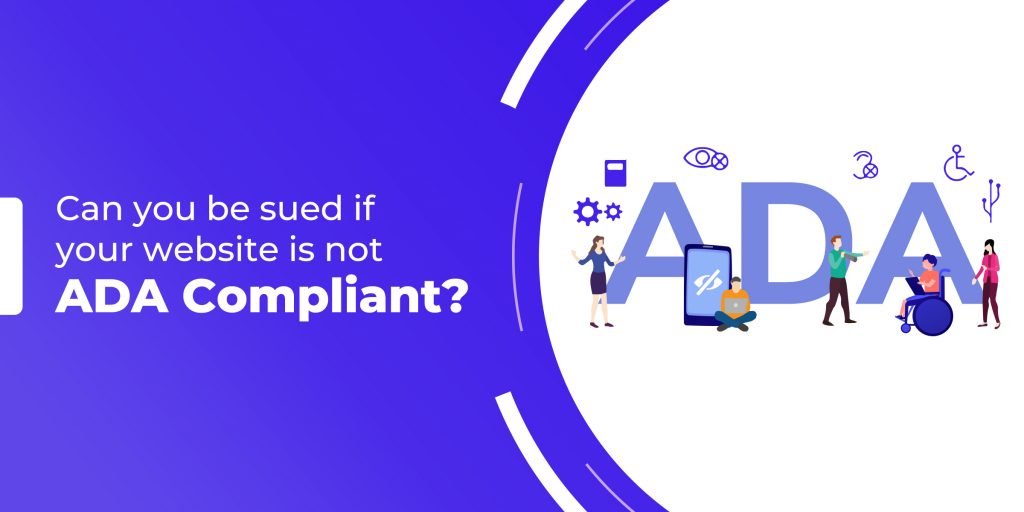
WCAG 2.1 Level AA is the most widely adopted accessibility standard worldwide. It ensures that websites are usable for people with a wide range of disabilities, including visual, auditory, cognitive, and motor impairments.
To meet Website Accessibility Compliance 2026, websites and apps must support the following key requirements.
1. Keyboard-Only Navigation
All interactive elements—menus, buttons, forms, modals—must be usable without a mouse. This is critical for users who rely on keyboards or assistive devices.
2. Screen Reader Compatibility
Web content must use proper semantic HTML, ARIA attributes, and logical reading order so screen readers can accurately interpret and announce content.
3. Sufficient Color Contrast and Readable Text
Text must meet minimum contrast ratios to ensure readability for users with low vision or color blindness. Fonts should be scalable without breaking layouts.
4. Image Text Alternatives (Alt Text)
All meaningful images must include descriptive alt text so users who cannot see images can still understand the content.
5. Accessible Forms and Error Messages
Forms must include associated labels, clear instructions, accessible validation messages, and error handling that works with assistive technologies.
6. Consistent Navigation and Clear Structure
Headings, landmarks, and page layouts must be consistent and predictable, helping users navigate efficiently.
These features are not “nice to have.” They are mandatory under ADA website accessibility requirements.
ADA Compliance Deadlines You Need to Know
The DOJ has introduced phased deadlines based on the size of the organization:
- April 2026 – Large state and local government entities
- April 2027 – Smaller state and local government entities
Although these deadlines are focused on public entities, private businesses are not exempt from ADA enforcement. Many private organizations already face accessibility lawsuits, making WCAG 2.1 Level AA compliance a smart proactive move.
Why Website Accessibility Matters Beyond Legal Compliance
While compliance is the driver, accessibility delivers significant long-term benefits:
- Digital inclusion for millions of users with disabilities
- Improved overall user experience for all visitors
- Stronger SEO performance, as accessible websites are easier for search engines to crawl
- Higher engagement and conversions, especially on forms and landing pages
- Reduced legal and compliance risk
Accessibility improves clarity, usability, and performance—making your website better for everyone, not just users with disabilities.
How SB Code Lab Supports Website Accessibility Compliance 2026
At SB Code Lab, we help organizations achieve and maintain Website Accessibility Compliance 2026 through a structured, audit-driven approach.
Our Accessibility Services Include:
- Automated and manual WCAG 2.1 Level AA audits
- ADA compliance gap analysis and reporting
- Accessibility remediation for websites and web apps
- Screen reader testing (JAWS, NVDA, VoiceOver)
- Keyboard navigation and focus management testing
- Color contrast, typography, and UI accessibility fixes
- Ongoing compliance monitoring and support
With over 12 years of experience in web development and accessibility remediation, our team ensures accessibility is built into your digital foundation—not added as an afterthought.
Start Preparing for Website Accessibility Compliance 2026 Today
Accessibility remediation takes time, especially for large or content-heavy websites. Waiting until deadlines approach can lead to rushed fixes, higher costs, and compliance risks.
Starting early allows for:
- Phased remediation without disruption
- Better planning and budgeting
- Long-term compliance sustainability
Website Accessibility Compliance 2026 is approaching fast—and preparation today ensures confidence tomorrow.
👉 If you need help auditing, remediating, or future-proofing your website accessibility, SB Code Lab is ready to help.